
Personalized AI Companions: How They Learn and Adapt to You

Introduction to Personalized AI Companions
In the rapidly evolving world of technology, personalized AI companions have emerged as a groundbreaking innovation, transforming the way we interact with machines. Unlike traditional software or static chatbots, these AI companions are designed to learn from and adapt to individual users, offering a tailored experience that feels uniquely personal. Whether it’s a virtual assistant like Siri or Alexa, or more advanced AI systems integrated into gaming, healthcare, or personal productivity tools, the core strength of these companions lies in their ability to understand and predict user needs over time. This article delves into the fascinating mechanisms behind AI personalization, exploring how these systems learn, adapt, and enhance user experiences in ways that were once unimaginable.
The concept of personalized AI companions is rooted in the broader field of artificial intelligence (AI) and machine learning (ML). By leveraging vast amounts of data and sophisticated algorithms, these companions can analyze user behavior, preferences, and patterns to deliver customized responses and solutions. According to a 2022 report by Statista, the global AI market is expected to reach $500 billion by 2024, with a significant portion driven by personalized AI applications. This growth reflects a growing demand for technology that not only performs tasks but also builds meaningful, adaptive relationships with users. From recommending the perfect playlist to providing mental health support, personalized AI companions are becoming indispensable in our daily lives.

How AI Companions Learn from User Interactions
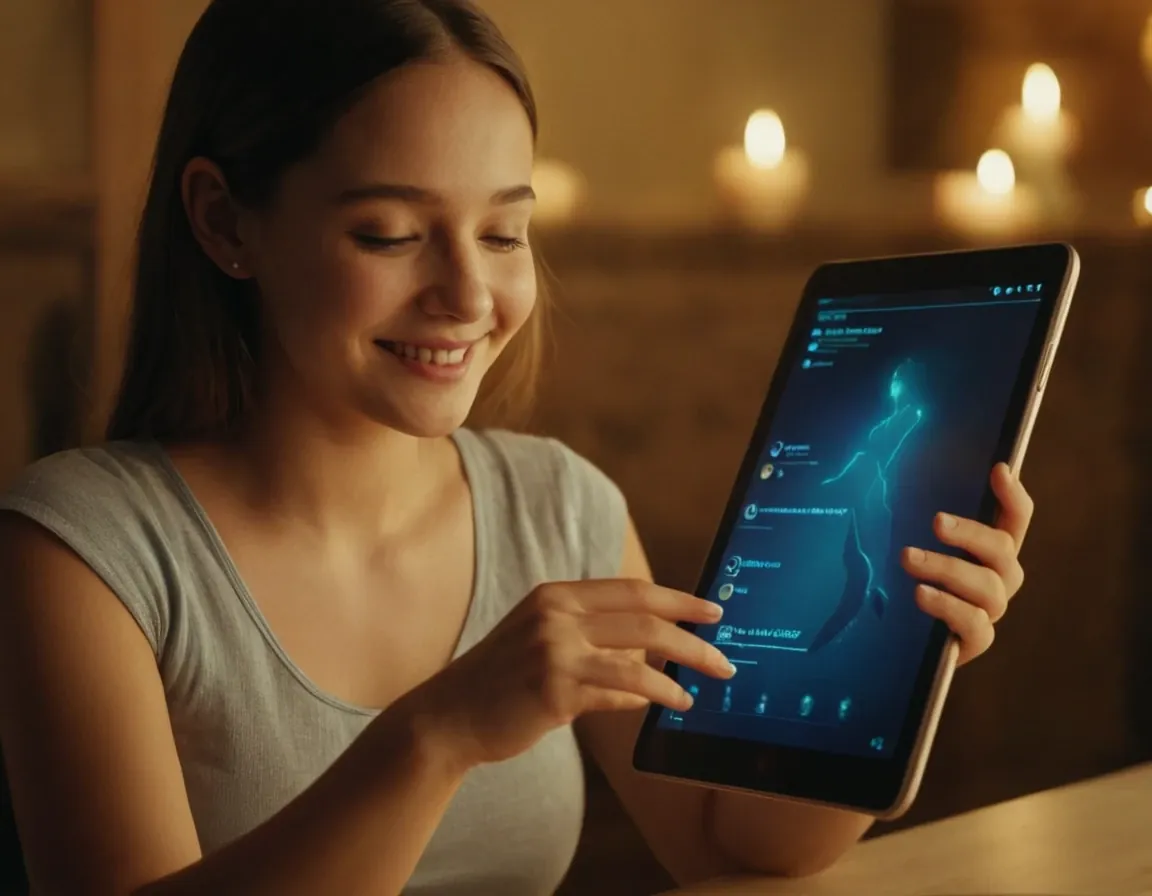
At the heart of every personalized AI companion is a complex system of learning algorithms designed to process and interpret user data. These systems rely on machine learning, a subset of AI, to identify patterns and make predictions based on past interactions. For instance, when you ask a virtual assistant like Google Assistant to set a reminder, it doesn’t just execute the command—it also learns from the context, such as the time of day or the frequency of similar requests, to improve future interactions. Over time, the AI companion becomes more attuned to your habits, offering suggestions before you even ask. This process, often referred to as 'user behavior analysis,' is what makes AI personalization so powerful.
The learning process typically begins with data collection. AI companions gather information from various sources, including voice commands, text inputs, browsing history, and even biometric data in some advanced systems. This data is then fed into neural networks, which mimic the human brain’s structure to process and analyze information. A 2021 study by McKinsey found that 67% of companies using AI reported improved customer satisfaction due to personalized experiences. Take Spotify’s recommendation engine as an example: by analyzing your listening history, liked songs, and even the time of day you listen to music, the platform curates playlists that feel uniquely yours. This level of personalization is only possible through continuous learning and adaptation, ensuring that the AI companion evolves alongside the user.


The Role of Adaptive AI Technology in Personalization
Adaptive AI technology is the backbone of personalized AI companions, enabling them to adjust their behavior based on real-time feedback. Unlike static programs that follow pre-defined rules, adaptive AI systems use reinforcement learning—a method where the AI learns through trial and error to maximize positive outcomes. For example, if an AI companion suggests a restaurant and the user consistently declines similar suggestions, the system will adjust its algorithm to prioritize different types of recommendations. This dynamic adaptability ensures that the AI remains relevant and useful, even as user preferences change over time. The result is a seamless, intuitive experience that feels less like interacting with a machine and more like engaging with a trusted friend.
Moreover, adaptive AI technology often incorporates natural language processing (NLP) to enhance communication. NLP allows AI companions to understand and generate human-like responses, making interactions more natural and engaging. According to a report by Gartner, by 2025, 80% of customer interactions will involve AI-powered chatbots or virtual assistants equipped with advanced NLP capabilities. A real-world example is Replika, an AI companion app designed for emotional support. Replika uses adaptive AI to tailor conversations based on the user’s mood, tone, and past interactions, creating a deeply personal connection. This level of customization is a testament to how far adaptive AI technology has come in bridging the gap between human and machine interaction.


Real-World Applications of Personalized AI Companions
Personalized AI companions are no longer a futuristic concept—they are already integrated into various aspects of our lives, from entertainment to healthcare. In the gaming industry, for instance, AI companions enhance immersion by adapting to a player’s style and decisions. Games like 'The Last of Us Part II' feature AI characters that react dynamically to player actions, creating a more realistic and emotionally engaging experience. Beyond gaming, AI companions are also making waves in education. Platforms like Duolingo use personalized AI to adjust lesson difficulty and content based on a user’s learning pace, ensuring optimal progress. These examples highlight the versatility of AI personalization across different sectors.
In healthcare, personalized AI companions are revolutionizing patient care by providing tailored support and monitoring. Wearable devices like Fitbit use AI to analyze health data and offer personalized fitness and wellness advice. More advanced systems, such as IBM Watson Health, assist doctors by providing customized treatment recommendations based on patient history and genetic data. A 2023 report by Deloitte predicts that AI-driven healthcare solutions will save the industry $150 billion annually by 2026, largely due to personalized interventions. These applications demonstrate how AI companions are not just conveniences but also life-changing tools that adapt to individual needs with remarkable precision.


The Future of AI Companions: Trends and Challenges
As technology continues to advance, the future of personalized AI companions looks incredibly promising. One emerging trend is the integration of emotional intelligence into AI systems, allowing companions to detect and respond to human emotions with greater accuracy. Imagine an AI companion that not only schedules your day but also senses when you’re stressed and offers calming techniques or motivational words. Companies like Affectiva are already pioneering emotion AI, which analyzes facial expressions and voice tones to gauge emotional states. According to a forecast by MarketsandMarkets, the emotion AI market is expected to grow to $5 billion by 2027, signaling a shift toward more empathetic and human-like AI interactions.
However, the rise of personalized AI companions also brings significant challenges, particularly around privacy and ethics. With AI systems collecting vast amounts of personal data to enable personalization, concerns about data security and misuse are paramount. High-profile data breaches, such as the 2018 Cambridge Analytica scandal, have heightened public awareness of these risks. Additionally, there’s the ethical question of dependency—could over-reliance on AI companions impact human relationships or mental health? Addressing these challenges will require robust regulations, transparent data practices, and a commitment to ethical AI development. As we move forward, striking a balance between innovation and responsibility will be crucial to ensuring that personalized AI companions remain a force for good.


Conclusion: Embracing the Era of Personalized AI
Personalized AI companions represent a remarkable leap forward in how we interact with technology, offering experiences that are uniquely tailored to each user. Through advanced learning algorithms, adaptive AI technology, and continuous user feedback, these companions are becoming more intuitive, empathetic, and indispensable with each passing day. From enhancing daily productivity to providing emotional support and transforming industries like healthcare and education, the impact of AI personalization is profound and far-reaching. As we stand on the cusp of even greater advancements, it’s clear that personalized AI companions will play a central role in shaping the future of human-machine interaction.
Yet, as we embrace this era of AI-driven personalization, we must also remain vigilant about the ethical and privacy implications. By fostering innovation while prioritizing user trust and security, we can ensure that personalized AI companions continue to enrich our lives without compromising our values. Whether you’re already using an AI assistant or exploring the possibilities for the first time, one thing is certain: the journey of AI adaptation and learning is just beginning, and its potential to transform our world is limitless.